How to Tell When Painted Steel Needs Maintenance: 7 Warning Signs

Updated: Sep 2
Rust, peeling paint, and other coating problems can be signs that painted steel needs attention. Here are seven things facility managers should look for.
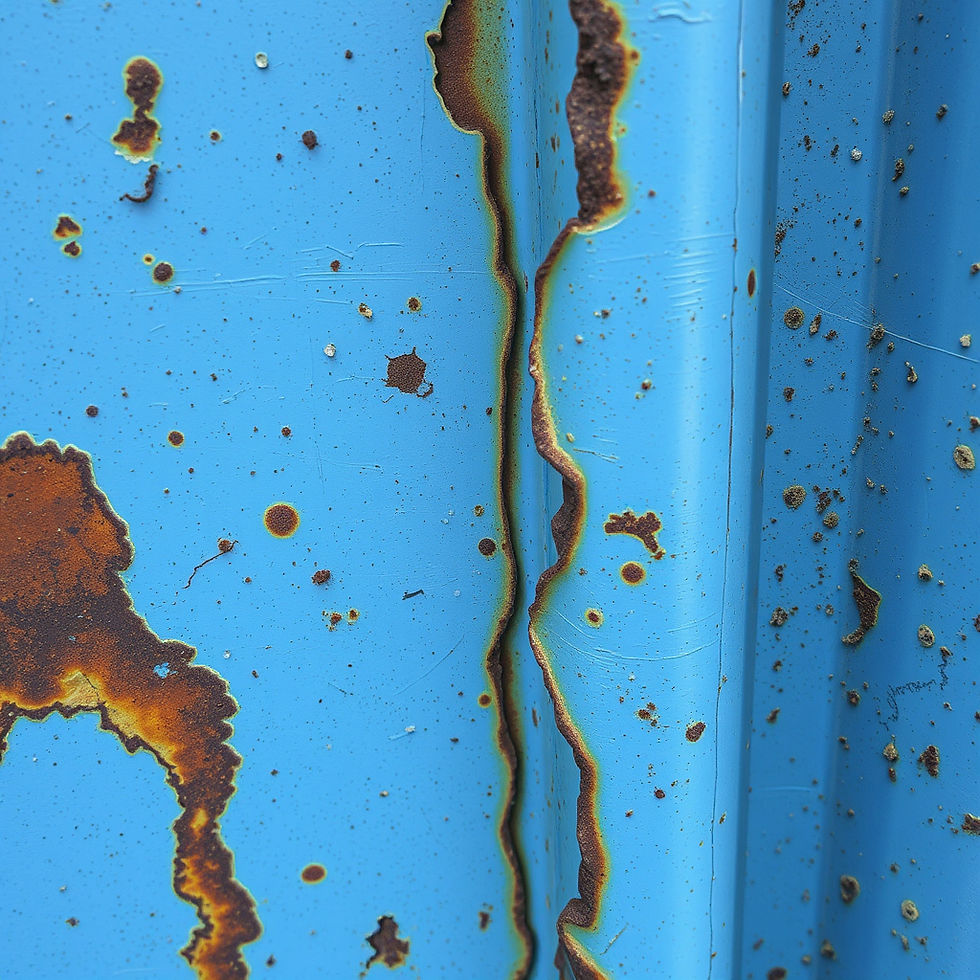
Painted steel helps protect the underlying metal from the environment. Over time, coatings can weather, become damaged, or lose adhesion, allowing corrosion to develop.
The good news is that not every rust spot means the entire asset needs to be repainted.
1. Rust Is Showing Through the Coating
Look for rust around:
Welds
Bolts and fasteners
Edges and corners
Connections
Previous repair areas
Small, isolated areas may require only localized maintenance, while widespread rust may indicate a larger coating problem.
2. Paint Is Peeling or Flaking
Loose or peeling paint should be addressed rather than simply covered with another coat.
The failed coating generally needs to be removed and the surface properly prepared before recoating.
3. Bare Steel Is Exposed
Once the coating is gone, the steel is exposed to moisture and the surrounding environment.
Look for bare steel caused by:
Impact
Abrasion
Weathering
Previous repairs
Coating failure
4. The Coating Is Blistering or Cracking
Blistering and cracking can have several causes, including moisture, contamination, or coating deterioration.
Document where these conditions occur and whether they are isolated or widespread.
5. Rust Keeps Coming Back
If the same area repeatedly rusts after being repaired, look for an underlying cause.
Moisture, poor drainage, water traps, difficult geometry, or previous surface-preparation issues can contribute to recurring corrosion.
6. The Coating Looks Different From the Rest
Significant fading, chalking, patch repairs, or differences in color, gloss, or texture can indicate areas that deserve a closer look.
These conditions don't automatically mean the coating has failed, but they can help identify areas for inspection.
7. Corrosion Is Becoming More Extensive
Pay attention when isolated rust begins appearing in multiple locations or when corrosion becomes heavy, scaly, or appears to involve pitting.
At that point, the condition may require more than routine touch-up work.
Does the Entire Asset Need to Be Repainted?
Not necessarily.
Depending on the condition, maintenance may involve:
Spot repair → Partial recoat → Full recoat
The appropriate approach depends on the existing coating, substrate condition, environment, surface preparation requirements, and project specifications.
If significant pitting, section loss, cracking, deformation, or other structural concerns are suspected, obtain an appropriate professional evaluation before proceeding.
What Should You Do When You Find Rust?
Take photos before disturbing the area.
Get an overall photo, a close-up of the problem, and photos showing nearby welds, connections, and surrounding coating.
Then document:
Where the problem is
Approximate size
Whether it is isolated or widespread
Whether moisture may be involved
Whether the area has been repaired before
Good documentation makes it easier to determine what type of maintenance may be appropriate.
The Bottom Line
Don't wait for a small coating problem to become a major corrosion problem.
Regularly look for rust, peeling, cracking, exposed steel, and moisture-related deterioration. Early identification can give facility managers more options when planning maintenance.
Summit Painting Contractors LLC helps facility managers with coating maintenance, surface preparation, corrosion repair, concrete coatings, anti-slip coatings, and other small facility maintenance projects.
Have an asset that needs attention?
This article is provided for general educational purposes and is not a substitute for engineering, structural, safety, or site-specific professional evaluation.


Comments